Facebook Is Dangerous
 It's rare for me to link to an article without having much more to add, but Tom Hodgkinson in the Guardian does every human being involved in internet anything (and possibly more people than that) a massive service by writing this article on Facebook. It's a superb exposé / deconstruction of the reason for Facebook's existence, it's modus operandi, and the scary political vision of Peter Theil, the "real face behind Facebook".
This little taster from their website will give you an idea of their vision for the world: "TheVanguard.Org is an online community of Americans who believe in conservative values, the free market and limited government as the best means to bring hope and ever-increasing opportunity to everyone, especially the poorest among us." Their aim is to promote policies that will "reshape America and the globe". TheVanguard describes its politics as "Reaganite/Thatcherite". The chairman's message says: "Today we'll teach MoveOn [the liberal website], Hillary and the leftwing media some lessons they never imagined."
So, Thiel's politics are not in doubt. What about his philosophy? I listened to a podcast of an address Thiel gave about his ideas for the future. His philosophy, briefly, is this: since the 17th century, certain enlightened thinkers have been taking the world away from the old-fashioned nature-bound life, and here he quotes Thomas Hobbes' famous characterisation of life as "nasty, brutish and short", and towards a new virtual world where we have conquered nature. Value now exists in imaginary things. Thiel says that PayPal was motivated by this belief: that you can find value not in real manufactured objects, but in the relations between human beings. PayPal was a way of moving money around the world with no restriction. Bloomberg Markets puts it like this: "For Thiel, PayPal was all about freedom: it would enable people to skirt currency controls and move money around the globe."
Clearly, Facebook is another uber-capitalist experiment: can you make money out of friendship? Can you create communities free of national boundaries - and then sell Coca-Cola to them? Facebook is profoundly uncreative. It makes nothing at all. It simply mediates in relationships that were happening anyway.
This social media revolution is all about "sharing" we are often told, but what does that mean? As Tom says, "Share" is Facebookspeak for "advertise". In this context, share is all about survival of the kind of open society we enjoy - read his article, come to your own conclusions.
I previously wrote about Facebook here. I collect links on Facebook here: http://del.icio.us/deekdeekster/Facebook/

posted by Deek Deekster @ 11:32 AM
1 comments


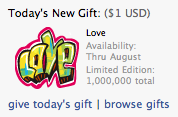 In Facebook, love costs just one dollar, which is either very cheap indeed, or massively over-priced, depending on your views. I've recently become fascinated with the fascination that other people are showing for this fast-growing social networking site. Apparently sane and intelligent people seem to enjoy this "walled garden" so much that
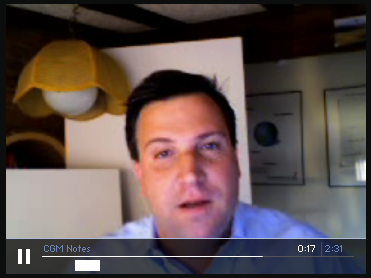 Internally, Facebook seems to be full of geeks in a fever of video messaging, crowing about the wonder of the system, the "traction", the "community" - micro-media exponents galore, commenting glibly one after another on the cleverness of their own high-tech take on this new world. I find myself on a deep level uneasy about this activity - are there not more important things to be concerned about than which tech conference to visit next and who to drink with when you are there?